



Description
The story behind Arctic Winter Sarnesfjorden II
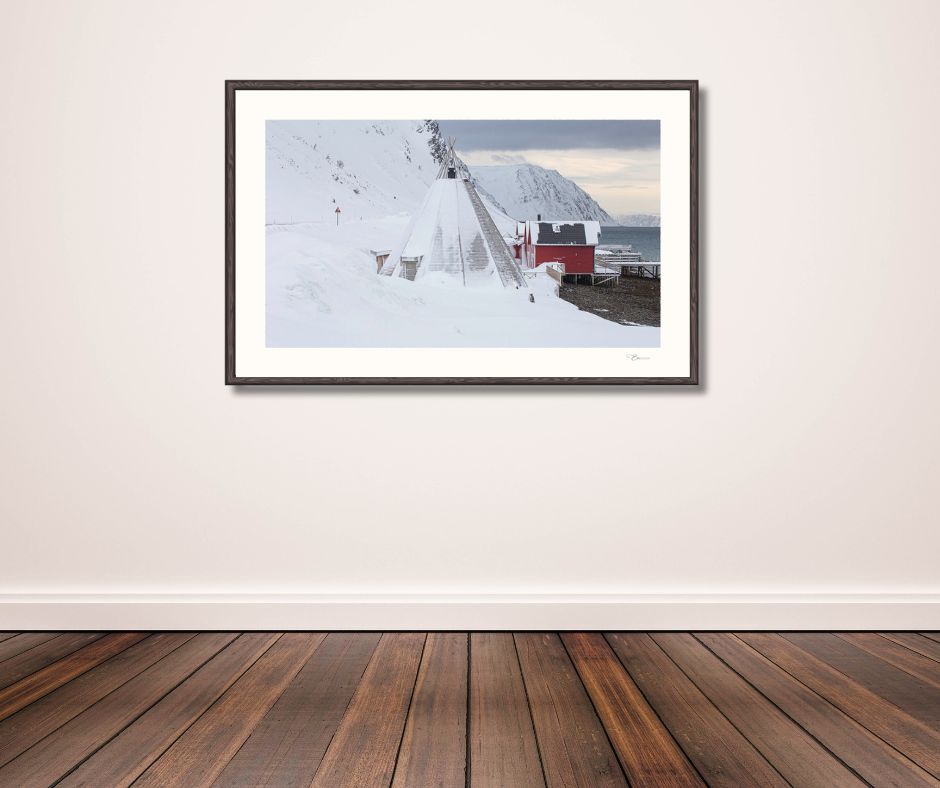
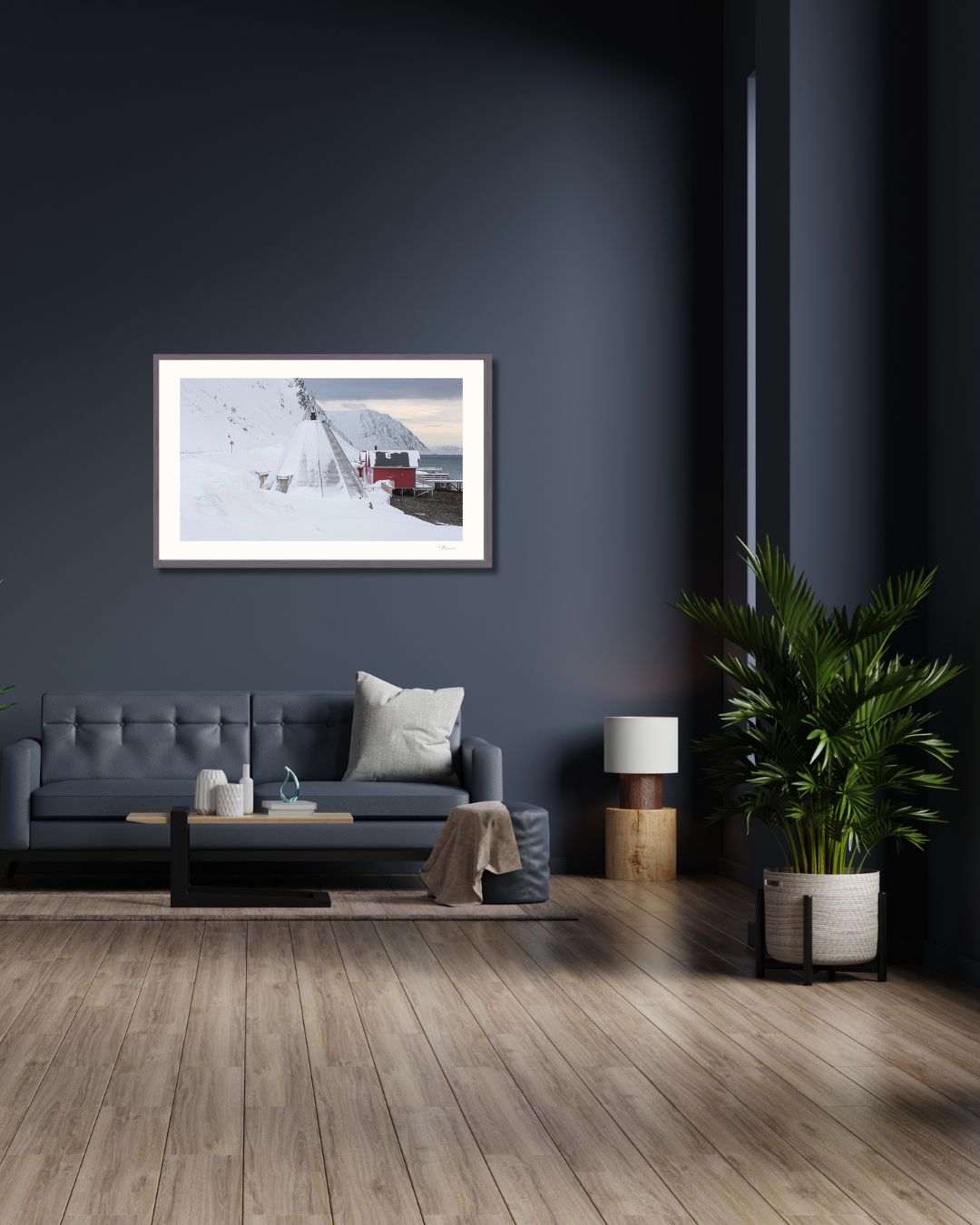
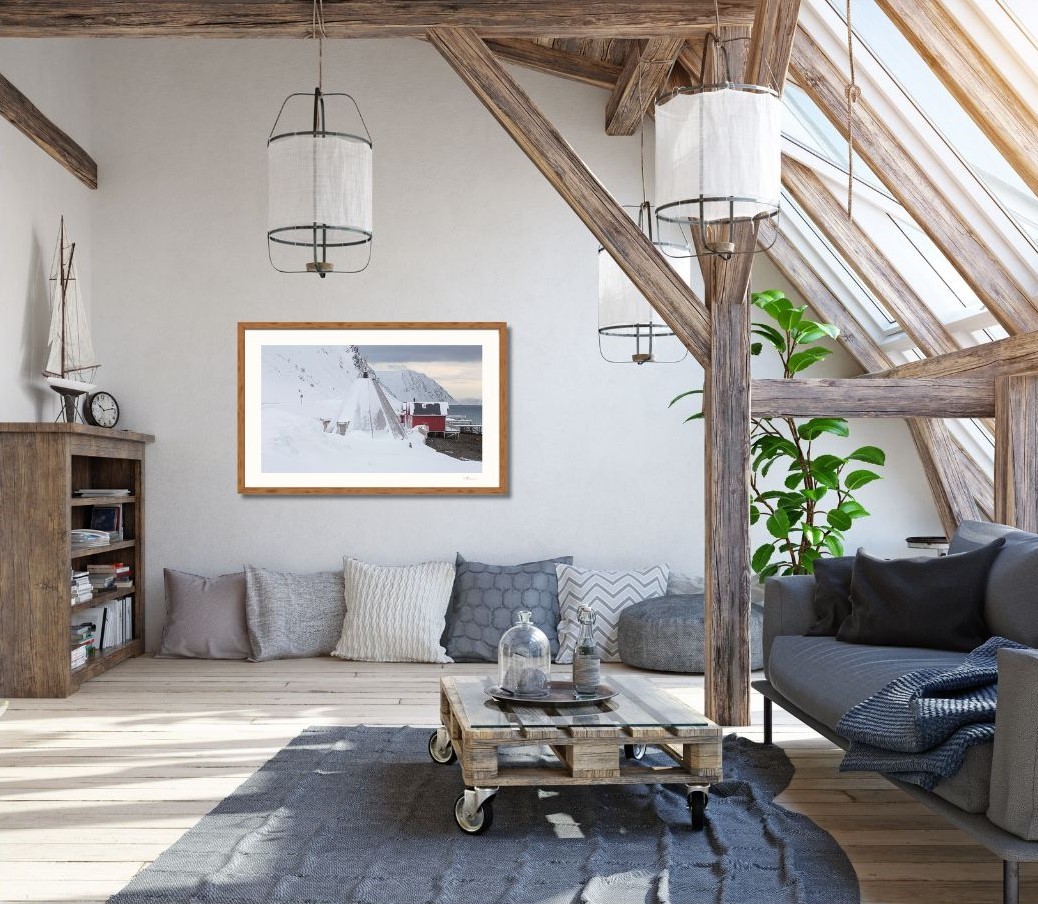
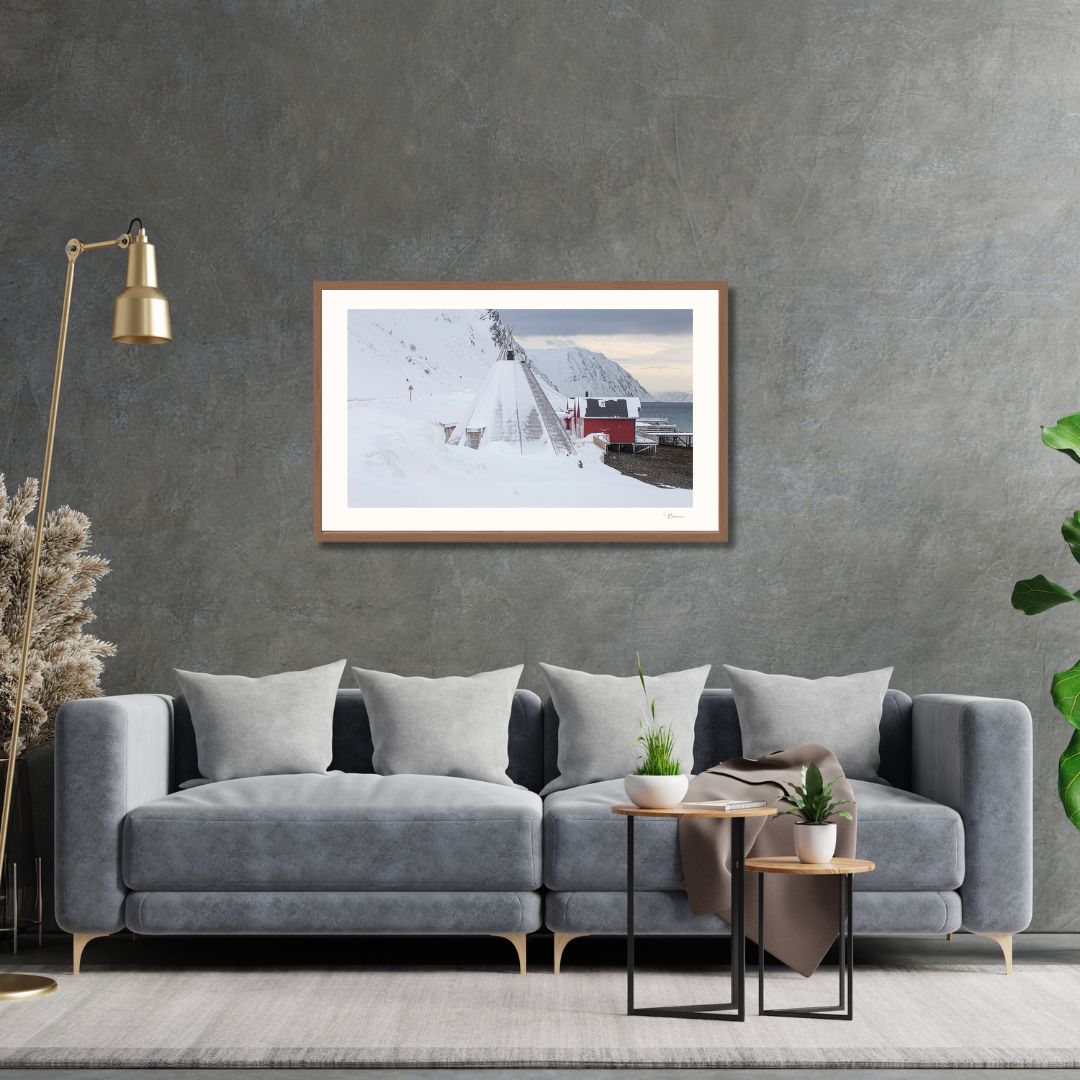
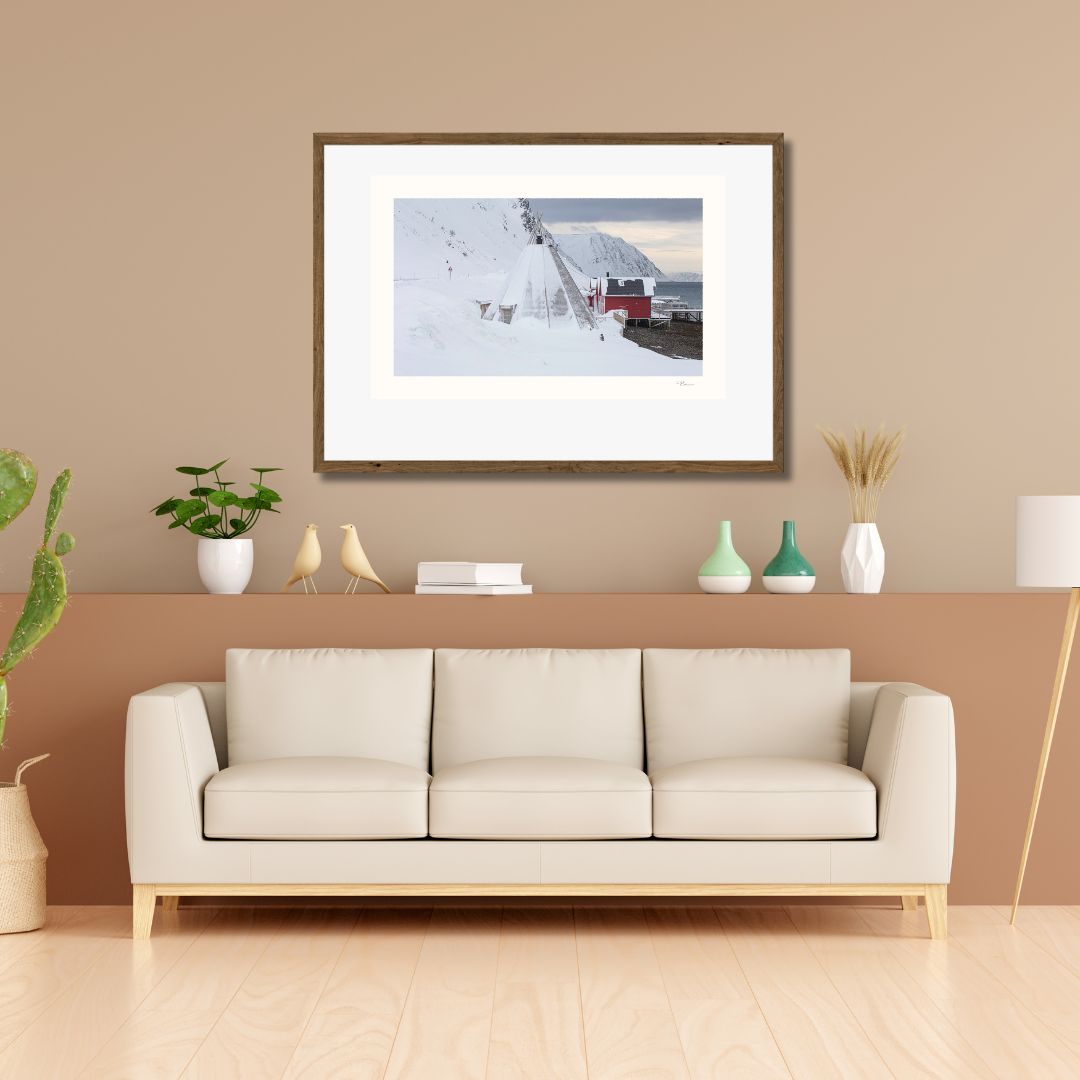
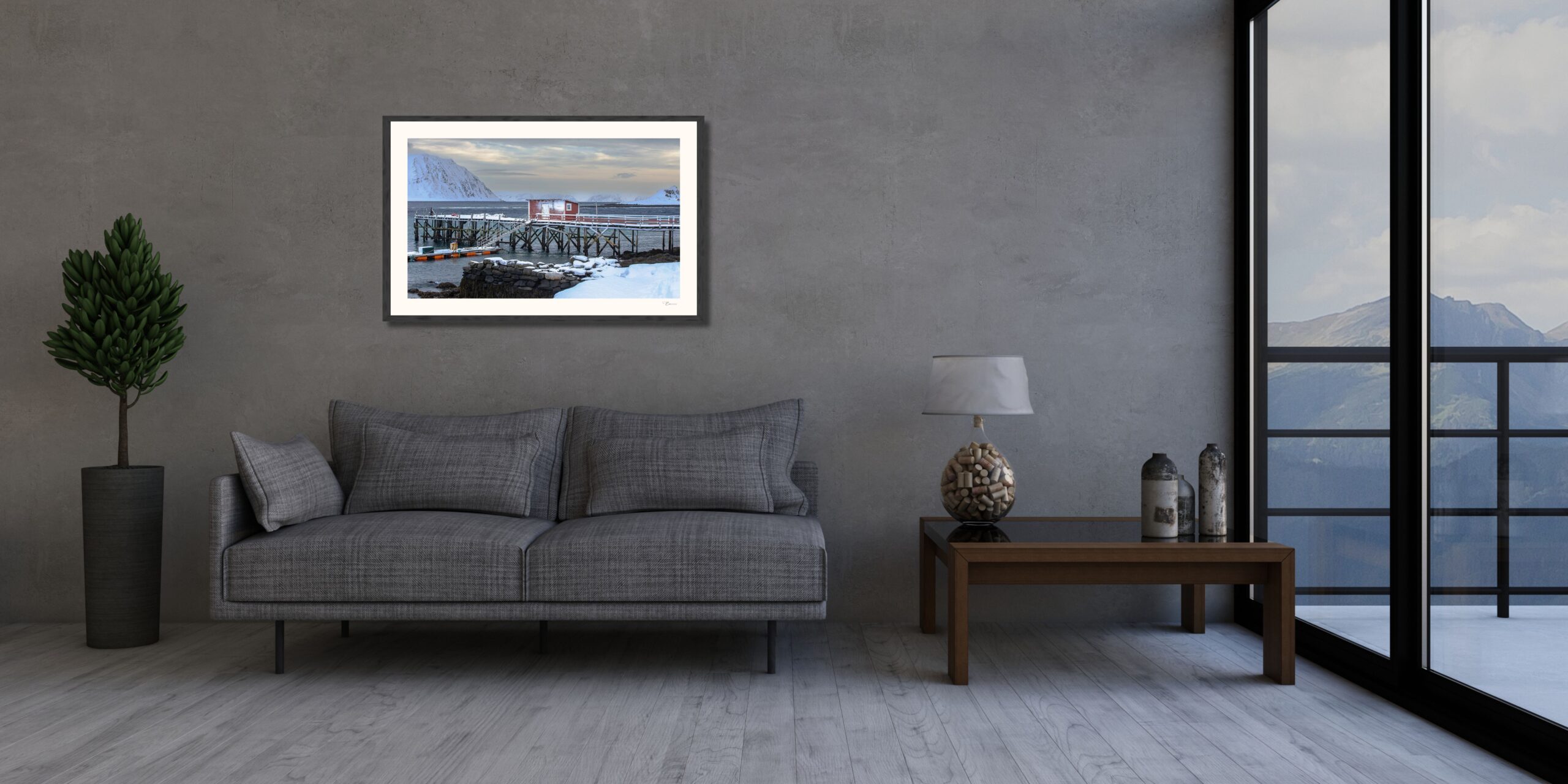
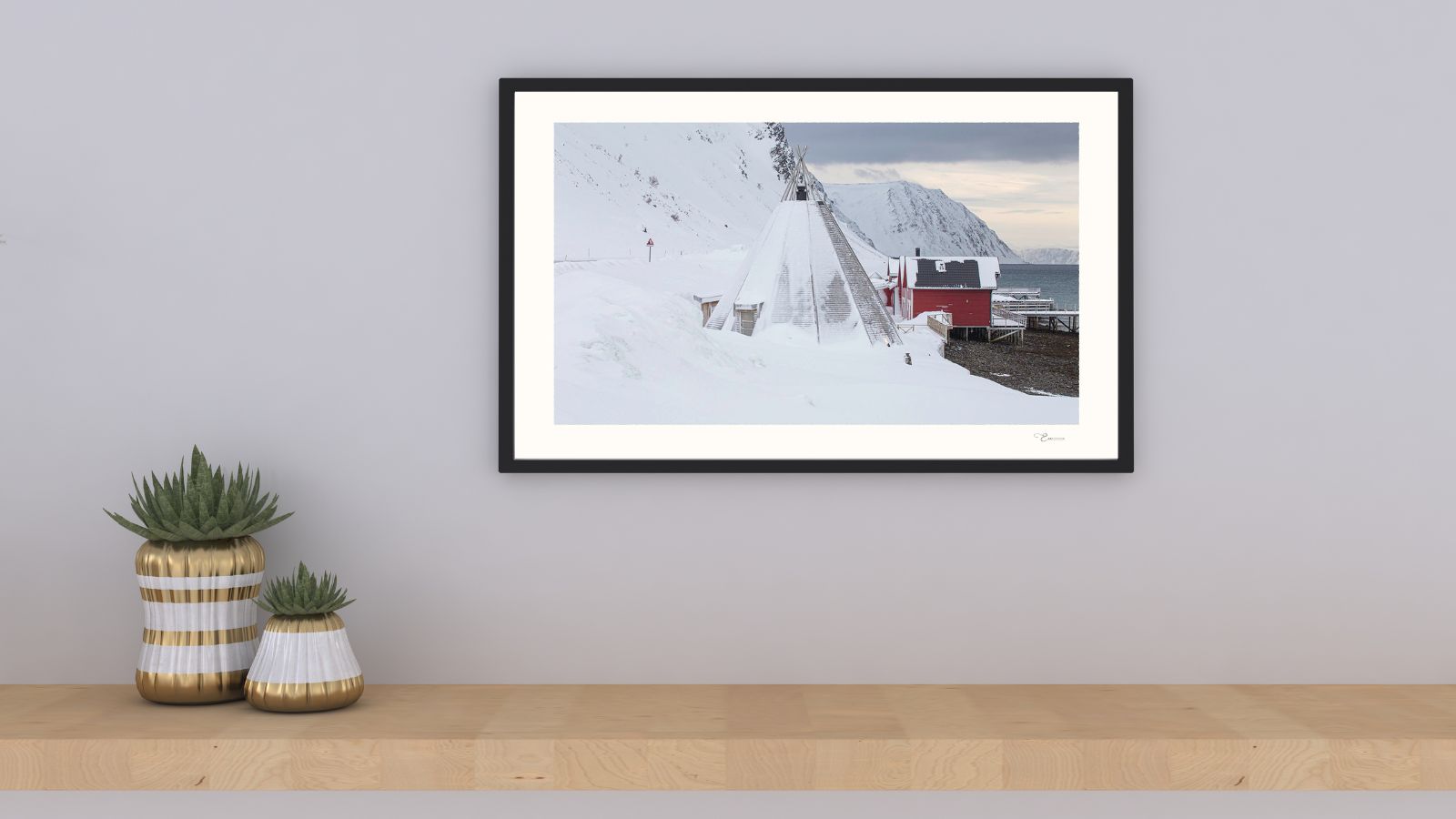
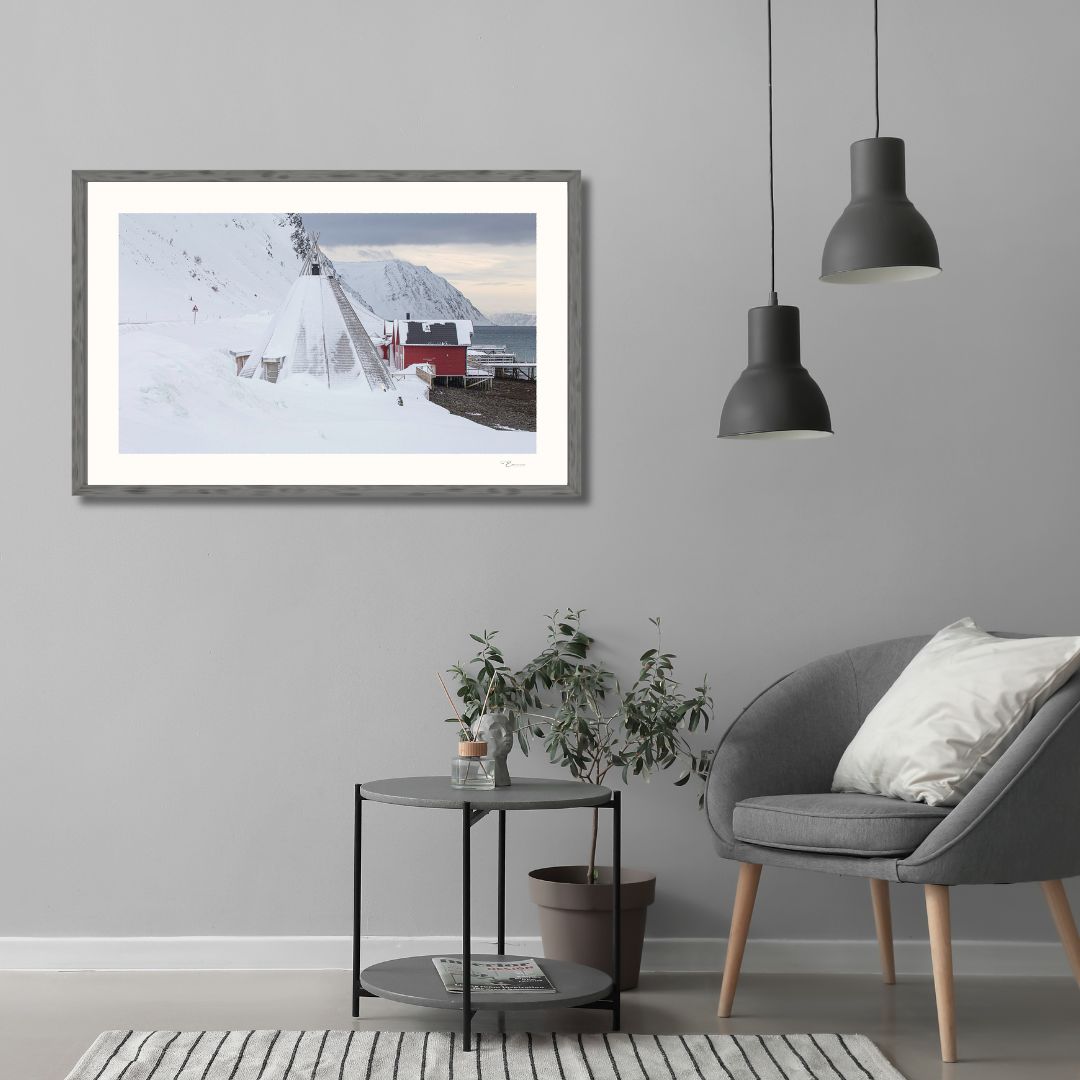
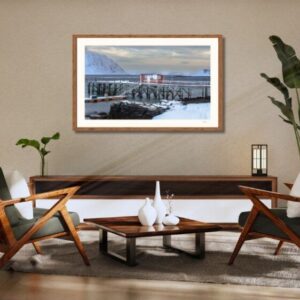
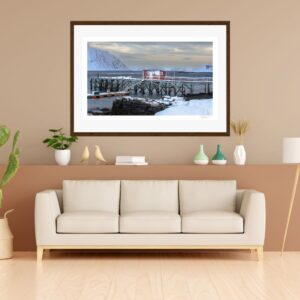
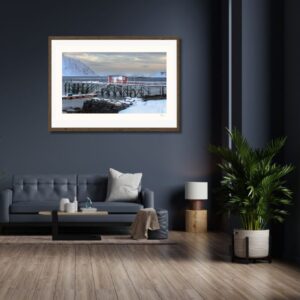
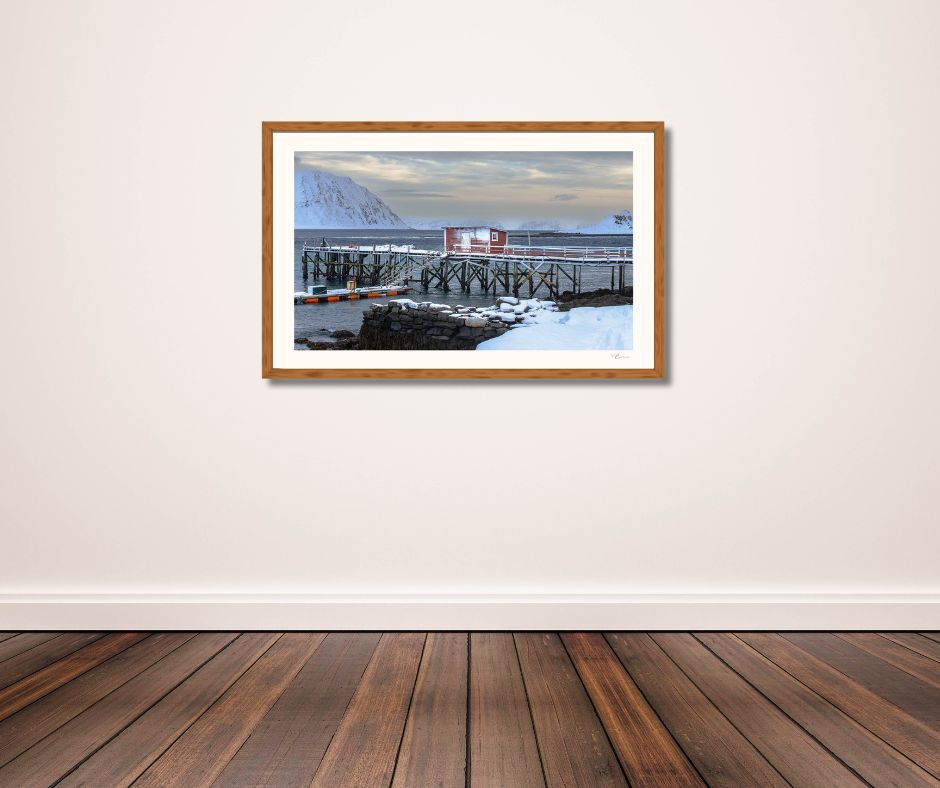
Arctic Winter Sarnesfjorden II captures the raw atmosphere of a remote bay in Nordkapp, Finnmark, where the Arctic elements shape the landscape. On this winter day, a darkening sky signalled an approaching storm over the Barents Sea. Waves crash against the rugged coastline, creating a striking contrast between the restless sea and the snow-covered shore.
Along the icy shoreline, a traditional snow-covered Sámi lavvo and a rustic red boathouse stand out against the stark winter landscape, revealing traces of the local traditions and coastal life that have shaped this region for generations.
Beyond the dramatic weather, the photograph offers a glimpse into the history and way of life of the people who have lived along this northern coastline. It captures more than an Arctic winter scene; it documents a landscape where nature, history, and local traditions remain closely connected.
The Sámi Lavvo and Coastal Heritage of Finnmark
The Arctic coastline of Finnmark is a landscape shaped by powerful elements, where the vast tundra meets the freezing waters of the Barents Sea. For generations, this rugged environment has been the home of the Sea Sámi people, a culture deeply intertwined with both the sea and the land. While fishing provided vital sustenance from the deep fjords, reindeer husbandry and seasonal migrations defined the pulse of life along these northern shores.
Historically, the most iconic symbol of this nomadic endurance is the traditional Sámi lavvo. Far more than just a temporary tent. The lavvo represents a masterclass in indigenous engineering, uniquely designed to withstand the unpredictable Arctic weather. Its conical shape allows fierce winds to glide effortlessly over the structure. In addition, the sturdy wooden poles, traditionally gathered from resilient Arctic birch, provide a stable frame against heavy winter snowfalls.
At the heart of the lavvo, a central hearth always provided warmth, light, and a gathering place for storytelling, passing down ancestral wisdom through generations. Consequently, the structure served as a sanctuary of comfort and community in the middle of the untamed wilderness.
The History of Sarnes
Sarnes has a history spanning more than 10,000 years, reaching back to the end of the last Ice Age. Archaeological excavations carried out as part of the FATIMA project uncovered cist graves and more than 500 historical artefacts.
Historical census records show that 31 people lived permanently in Sarnes in 1875. Archaeological findings also reveal evidence of some of the earliest known human settlements in Finnmark, including animal bones from ancient hearths dating back approximately 10,300 years. Tromsø Museum documents these findings in the scientific journal Ottar (No. 212, 1996) and Reflex (1993-2).
Bring this sense of untamed Nordic calm into your space – whether in a private home, a mountain cabin, a boutique hotel, or a public building, this timeless focal point is crafted to inspire every day.
Museum-Quality Archival Prints for Collectors, Homes, Hotels and Corporate Spaces
Dimensions, White Border & Framing
This piece belongs to a dedicated series of northern winter landscapes.
To explore more dramatic coastlines from this series, view Arctic winter Sarnesfjorden V or discover the complete Finnmark Collection.
























Reviews
There are no reviews yet.